Trump’s Executive Intervention on TSA Pay Amid DHS Funding Stalemate Raises Questions of Executive Overreach and Congressional Gridlock
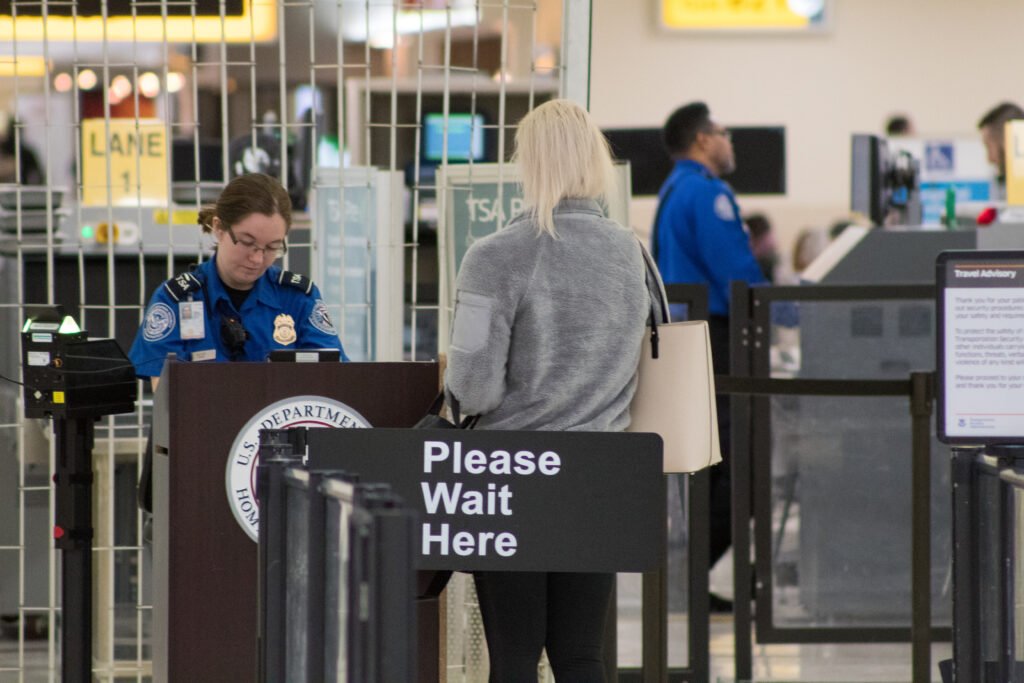
President Donald Trump announced Thursday that he will sign an executive order directing the Department of Homeland Security to immediately begin paying the roughly 50,000 Transportation Security Administration officers who have gone without full paychecks for more than 40 days during a partial government shutdown. The move, framed by the president as a necessary step to end “Democrat Chaos at the Airports,” comes as Senate negotiations over funding the department remain deadlocked, with lawmakers preparing for a spring recess and travelers facing some of the longest security lines in memory.
The funding impasse, now in its 41st day, centers on deep partisan divisions over immigration enforcement policies. Democrats have refused to approve a clean funding bill for DHS without significant guardrails on operations by Immigration and Customs Enforcement and Customs and Border Protection, including requirements for agents to wear visible identification, restrictions on raids near schools and churches, and an end to the use of administrative warrants in certain searches. Republicans, meanwhile, have pushed back, arguing that such changes would hamstring the administration’s border security agenda and that full funding for immigration priorities must remain intact.
Trump’s announcement, posted on Truth Social, stated he would instruct new DHS Secretary Markwayne Mullin—a former Oklahoma senator confirmed earlier this week—to “immediately pay our TSA Agents in order to address this Emergency Situation.” He added, “It is not an easy thing to do, but I am going to do it!” During a Cabinet meeting earlier in the day, the president warned that Congress must resolve the shutdown “immediately or we’ll have to take drastic measures,” having previously floated deploying the National Guard to airports.
Administration officials indicated the payments would draw from funds appropriated in last year’s major tax legislation, often referred to as the “One Big Beautiful Bill Act,” which included substantial allocations for DHS, including $75 billion directed toward ICE operations. This approach appears designed to avoid the more controversial step of declaring a national emergency, though White House aides had floated that option in recent days. Even so, the maneuver is likely to invite legal scrutiny, as it effectively allows the executive branch to redirect congressionally appropriated money in ways that bypass the normal appropriations process.
The human and operational toll of the shutdown has been stark. Acting TSA Administrator Ha Nguyen McNeill testified before a House committee this week that the situation at checkpoints is “dire.” More than 3,120 TSA officers—over 11% of the workforce—called out on Wednesday alone, with some airports reporting absentee rates exceeding 40%. Nearly 500 officers have quit since the funding lapse began in mid-February. Assaults on TSA personnel have surged more than 500%, according to McNeill, as frustrated travelers vent their anger on screeners working without pay.
Travelers have borne the brunt as well. Wait times at major hubs have reached historic highs. At Houston’s George Bush Intercontinental Airport, one passenger reported standing in line for more than two and a half hours, ultimately missing her flight. “I should have just driven,” she told reporters. “Five hours would have been hilarious next to this.” Nationwide, the combination of staff shortages and heightened tensions has disrupted spring travel plans for millions.
Republicans largely praised the president’s move. Senate GOP Whip John Barrasso called it “absolutely the right thing,” noting that TSA agents “are going to be paid.” Sen. Susan Collins of Maine, chair of the Appropriations Committee, suggested there are legal avenues to shift existing funds to cover TSA and even Coast Guard personnel without invoking emergency powers. Democrats, however, expressed frustration, with Senate Minority Leader Chuck Schumer insisting that any deal must include “real changes” to immigration enforcement practices, citing concerns over accountability following protests and reported incidents involving federal agents.
The contrast with other DHS components is telling. While TSA officers have gone unpaid, ICE personnel continue to receive salaries thanks to the dedicated funding streams from the prior tax bill. This disparity has fueled Democratic accusations that the shutdown selectively punishes frontline airport workers while shielding immigration enforcement arms central to the president’s agenda.
From a broader governance perspective, Trump’s intervention highlights the growing strain on America’s appropriations process in an era of polarized politics. Partial shutdowns have become recurring features of divided government, but using executive action to selectively fund critical functions—while leaving the underlying dispute unresolved—risks setting precedents that erode congressional power of the purse, a cornerstone of the Constitution. Critics will argue this is executive overreach; supporters will counter that Congress’s inability to perform its basic funding responsibilities left the president little choice amid real-world chaos at the nation’s gateways.
The episode also exposes vulnerabilities in the post-9/11 aviation security architecture. TSA was created to professionalize and federalize airport screening after the 2001 attacks. Yet its workforce, often underpaid and now facing acute financial hardship, has shown signs of breaking under prolonged uncertainty. Plasma donation centers near airports have reportedly seen spikes in visits from TSA families, and eviction notices have piled up for some officers. A workforce under such duress cannot deliver the consistent, professional security the traveling public expects and deserves.
Longer term, this crisis should prompt a serious rethink of how the United States funds and structures its transportation security apparatus. Relying on annual appropriations for essential, non-discretionary functions like airport screening invites exactly the kind of brinkmanship now on display. Options worth exploring include multi-year funding authorizations, user-fee enhancements that reduce dependence on general revenues, or even greater privatization at airports where feasible, as some major hubs like San Francisco already demonstrate with supplemental private screeners.
Politically, the shutdown fight reflects deeper fault lines. Democrats view aggressive immigration enforcement as overreach requiring oversight; Republicans see Democratic demands as obstructionism that prioritizes activist concerns over border security and operational continuity. With both sides dug in and a spring recess looming, the risk of prolonged disruption remains real even after Trump’s order provides temporary relief to TSA paychecks.
In my view, while the president’s action may alleviate immediate suffering for TSA officers and ease airport bottlenecks in the short run, it does not resolve the underlying governance failure. Congress exists to make hard choices on spending and policy priorities. When it abdicates that role through endless standoffs, the executive branch is tempted to fill the vacuum—often imperfectly and with lasting institutional costs. True resolution requires lawmakers to negotiate in good faith, balancing legitimate security imperatives with accountability and civil liberties concerns.
Until then, travelers, federal workers, and the broader economy will continue to pay the price of dysfunction in Washington. The executive order on TSA pay may stop the bleeding at checkpoints, but it cannot heal the deeper wound in how the world’s leading democracy manages its fiscal and security responsibilities.