Pattern of Deaths and Disappearances Among U.S. Scientists Sparks Calls for Federal Scrutiny
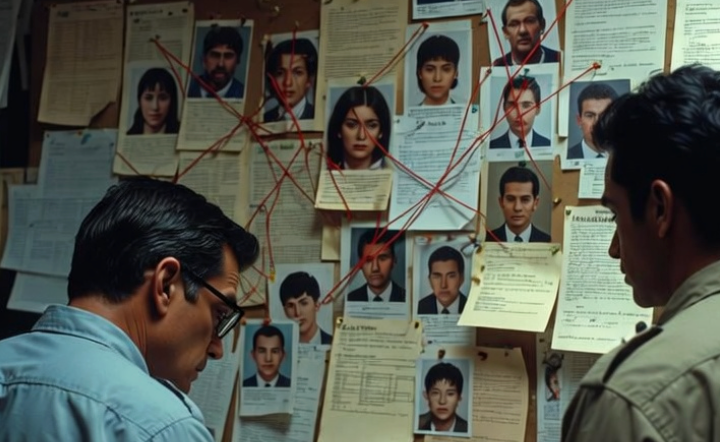
The quiet death of a veteran NASA Jet Propulsion Laboratory scientist in 2023 has resurfaced amid a string of unexplained fatalities and vanishings involving experts in space, defense, nuclear technology, and related fields. Michael David Hicks, who contributed to more than 80 scientific papers and played a role in high-profile missions such as the DART asteroid-deflection test, died on July 30, 2023, at age 59. No cause of death was publicly disclosed, and no autopsy record has been located, according to reports that have now drawn renewed attention.
Hicks’ case has been cited as the ninth in a loosely connected series of incidents stretching from 2023 into early 2026. While authorities have established no links among them and no public allegations of foul play have been made in most instances, the pattern has prompted lawmakers to urge the FBI to take a closer look. The developments highlight the inherent sensitivities surrounding individuals with access to critical technologies, even as they underscore the dangers of leaping to conspiracy without evidence.
Hicks worked at NASA’s JPL from 1998 until 2022, focusing on asteroid and comet research. His contributions included work on the Deep Space 1 mission and the Double Asteroid Redirection Test (DART), NASA’s pioneering effort to demonstrate the feasibility of deflecting a hazardous asteroid. Obituaries made no mention of prior health issues, and some directed memorial donations to Alcoholics Anonymous, though that detail offers little clarity on the circumstances of his passing.
The broader list, as compiled in recent media accounts, includes:
- Frank Maiwald, a 61-year-old NASA JPL researcher who died on July 4, 2024, with no cause disclosed.
- Anthony Chavez, a former Los Alamos National Laboratory employee who vanished on May 4, 2025.
- Monica Reza, a NASA scientist who disappeared on June 22, 2025, while hiking in California’s Angeles National Forest, reportedly vanishing just yards from her companions.
- Melissa Casias, a Los Alamos administrative assistant who went missing from her residence around June 26, 2025; her mobile devices were reportedly wiped.
- Jason Thomas, a Novartis researcher who disappeared on December 12, 2025; his body was recovered from a lake in March 2026.
- Nuno Loureiro, head of MIT’s Plasma Science and Fusion Center, who was fatally attacked at his home in Brookline, Massachusetts, on December 15, 2025.
- Carl Grillmair, a 67-year-old Caltech astrophysicist shot on his front porch on February 16, 2026.
- William Neil McCasland, a retired Air Force major general with ties to aerospace research programs, who left his New Mexico home on February 27, 2026, and has not been seen since.
These cases span natural deaths with limited public information, outright disappearances, and violent attacks. Some involve individuals with clearances or expertise in areas of strategic importance—asteroid defense, fusion energy, materials science for rockets, and nuclear research. Others, such as administrative staff or pharmaceutical researchers, sit further from the core of classified work.
Former FBI Assistant Director Chris Swecker has described the cluster as suspicious given the specialized backgrounds involved. Rep. Tim Burchett (R-Tenn.) and Rep. Eric Burlison (R-Mo.) have publicly called for greater attention, with Burlison requesting FBI assistance and describing the disappearances as “deeply concerning.” McCasland’s wife has pushed back against speculation tying her husband’s case to UFO-related inquiries, emphasizing that such theories misrepresent the facts.
From a national-security standpoint, the pattern—if one exists—deserves methodical investigation rather than sensationalism. Scientists and engineers working on asteroid detection, propulsion systems, fusion research, or nuclear programs routinely handle dual-use knowledge that could interest foreign adversaries. China and Russia have invested heavily in hypersonic weapons, space domain awareness, and counter-space capabilities; any disruption to U.S. expertise in these domains carries strategic weight. Yet correlation does not equal causation. Scientists, like any professional cohort, experience health events, accidents, suicides, and random crimes. The absence of disclosed causes in certain deaths can reflect privacy norms or ongoing inquiries rather than cover-ups.
Statistically, clusters of untimely deaths occur periodically in any large community, especially one aging into retirement years. JPL and Los Alamos employ thousands; MIT and Caltech host vibrant research ecosystems. High-stress careers involving classified material can exacerbate mental-health challenges, and outdoor activities—hiking, as in Reza’s case—carry inherent risks. Violent incidents, such as the attacks on Loureiro and Grillmair, appear more straightforwardly criminal, though the targeting of experts inevitably raises questions.
Still, several details stand out as warranting deeper probes. The sudden vanishing of Reza mere yards from companions in a popular hiking area defies easy explanation. The wiping of devices in Casias’s case echoes techniques sometimes associated with evading digital tracking. The lack of autopsy or transparent cause in Hicks’s death, occurring relatively soon after he left government service, invites legitimate curiosity. When multiple such anomalies accumulate in a short period among individuals with overlapping professional networks, law enforcement and intelligence agencies have a responsibility to examine potential common threads—foreign intelligence activity, internal threats, or even coordinated harassment—without presuming a grand conspiracy.
In my assessment, the appropriate response lies between dismissive skepticism and feverish speculation. Conspiracy narratives, particularly those invoking UFOs or extraterrestrial cover-ups, have proliferated online and risk discrediting serious inquiry. At the same time, reflexive institutional secrecy can fuel distrust. Greater transparency from agencies like NASA, the Department of Energy, and the Air Force Research Laboratory—where possible without compromising classified programs—would help. Routine post-incident reviews for personnel with significant clearances, enhanced coordination between local police and federal counterintelligence, and public reporting on non-sensitive patterns could restore confidence.
The episode also reflects broader societal anxieties about technological competition and institutional trust. In an era of intensifying great-power rivalry in space and advanced weaponry, the loss of institutional knowledge through any means—natural or otherwise—matters. Yet turning every unexplained death into evidence of a plot diminishes the gravity of genuine threats and distracts from solvable problems such as workplace mental health, physical security for researchers, and robust vetting of foreign collaborations.
As of now, local authorities continue to treat the disappearances as active cases, with McCasland’s disappearance remaining a priority for the Bernalillo County Sheriff’s Office. Federal involvement, if expanded, should focus on forensic analysis, digital forensics, and threat assessment rather than feeding speculation. Congress could usefully request classified briefings to determine whether any pattern threatens ongoing programs.
Ultimately, the cluster of cases involving Hicks and others serves as a reminder that expertise in sensitive fields carries risks beyond the laboratory. Whether these incidents prove coincidental, the product of separate criminal acts, or something more coordinated will depend on evidence, not headlines. Until clearer answers emerge, prudent vigilance—rather than paranoia—remains the soundest approach for protecting the talent pipeline that underpins American technological edge.