Appeals Court Upholds Protest Ban Supreme Court Plaza
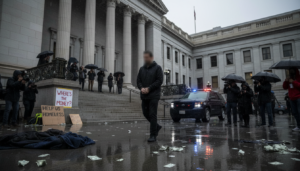
Washington, D.C. – An appeals court decision on June 26, 2015, upheld a ban on protests at the Supreme Court plaza, drawing fresh attention to the balance between free speech and public order. The U.S. Court of Appeals for the D.C. Circuit ruled in favor of restrictions that had been in place for years, effectively limiting demonstrations on the steps of the nation’s highest court. It was a straightforward win for authorities who argued that such gatherings could disrupt operations and pose security risks.
The ban stemmed from a 2013 regulation by the Supreme Court itself, which prohibited picketing and other expressive activities on its grounds. Critics had challenged it as an overreach, claiming it stifled the First Amendment rights of activists and everyday citizens. One group, led by a Maryland man arrested for protesting, took the case to court, hoping to overturn what they saw as an unfair curb on public expression. The appeals court, however, sided with the government, pointing to the need to maintain decorum around a sensitive institution.
Judges on the panel emphasized that the plaza isn’t a traditional public forum like a park or street corner, so the restrictions didn’t violate constitutional protections. It’s a decision that left some observers frustrated, as it seemed to prioritize order over the raw energy of protest in a city built on debate. That day, with the Supreme Court wrapping up its term amid high-profile rulings, the timing added an extra layer of irony.
Still, the ruling raised eyebrows about how far officials can go to control dissent in the capital. While it didn’t make national headlines like other court news that week, it highlighted ongoing tensions between security and civil liberties. For now, anyone wanting to make their voice heard near the Supreme Court will have to find another spot, a small but telling reminder of the limits on public protest in modern America.