White House Signals Review of Mysterious Deaths and Disappearances Among U.S. Scientists in Sensitive Fields
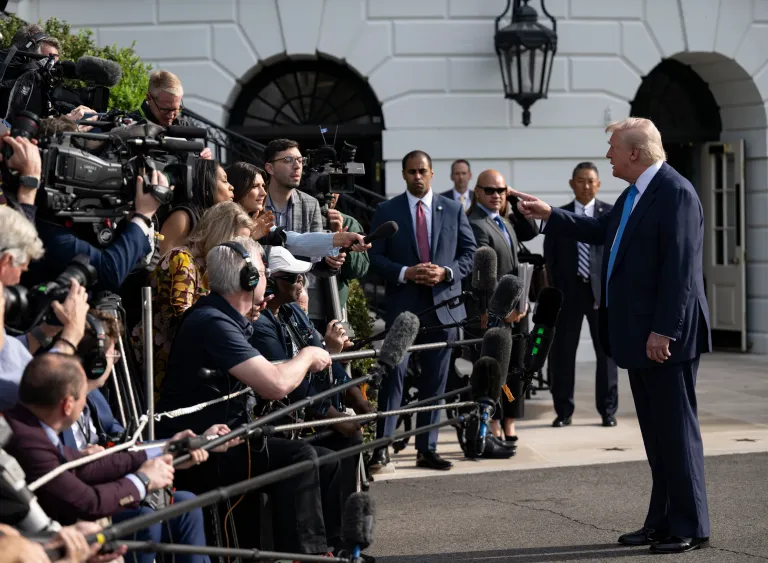
The Trump administration has indicated it will examine a cluster of unexplained deaths and disappearances involving at least 10 American scientists and researchers with ties to nuclear, aerospace, and advanced defense programs, elevating what had largely circulated as online speculation to the level of official interest. White House Press Secretary Karoline Leavitt told reporters on April 16 that she had not yet consulted relevant agencies but would do so and provide an answer, adding that “if true, of course, that’s definitely something I think this government and administration would deem worth looking into.”
The cases span from mid-2023 to early 2026 and involve personnel affiliated with NASA’s Jet Propulsion Laboratory, Los Alamos National Laboratory, MIT’s Plasma Science and Fusion Center, Caltech, and other institutions handling classified or strategically sensitive material. While authorities have not established any verified connections among the incidents—and experts caution against assuming a single cause—the pattern has drawn attention from lawmakers, former law enforcement officials, and national security observers concerned about potential espionage, internal threats, or other systemic risks.
Among the notable cases is Michael David Hicks, a 59-year-old NASA JPL research scientist who contributed to more than 80 papers and played a role in missions studying near-Earth asteroids and comets, including the DART asteroid-deflection test and Deep Space 1. Hicks died on July 30, 2023; no public cause of death was disclosed, and no autopsy record has surfaced. Other deaths include Frank Maiwald, another JPL principal researcher who passed away on July 4, 2024; Nuno Loureiro, director of MIT’s Plasma Science and Fusion Center, who was fatally shot at his home on December 15, 2025; and Caltech astrophysicist Carl Grillmair, shot on his front porch on February 16, 2026.
Disappearances add to the unease. Monica Reza, JPL’s former director of materials processing—who had worked on a government-funded rocket project—vanished on June 22, 2025, while hiking in California’s Angeles National Forest, reportedly just yards from companions. Anthony Chavez, a former Los Alamos employee, went missing on May 4 or 8, 2025. Melissa Casias, an administrative worker at Los Alamos, disappeared from her residence around June 26, 2025, with reports that her devices were wiped. Retired Air Force Maj. Gen. William “Neil” McCasland, with deep ties to aerospace programs, left his New Mexico home on February 27, 2026, without his phone, glasses, or wearable devices; a gray Air Force sweatshirt was later found nearby. Steven Garcia, a government contractor at the Kansas City National Security Campus, has been missing since August 28, 2025. Jason Thomas, a Novartis pharmaceutical researcher focused on cancer treatments, disappeared in December 2025; his body was recovered from a lake in March 2026.
Former FBI Assistant Director Chris Swecker, speaking on NewsNation, dismissed extraterrestrial or conspiracy-driven explanations while acknowledging the need for scrutiny. “I think there’s a rational explanation for this,” he said. “If it’s not just random acts, it’s modern-day espionage.” Swecker noted that such matters often involve classified information and that the FBI would likely review them discreetly if warranted.
The cluster has fueled online theories ranging from foreign intelligence operations—particularly given China’s aggressive pursuit of dual-use technologies—to more sensational claims involving UFO-related knowledge. Several individuals worked on asteroid detection, propulsion systems, fusion energy, or nuclear-related projects, areas of intense strategic competition. However, no concrete evidence links the cases, and some may ultimately prove unrelated: natural causes, personal tragedies, random crimes, or accidents. The absence of transparent cause-of-death information in certain instances has amplified speculation, a common challenge when dealing with personnel who held security clearances.
From a national-security vantage point, the pattern merits careful examination even absent proven connections. Scientists and engineers with access to classified material represent a high-value target for adversarial intelligence services. In an era of military-civil fusion strategies employed by competitors like China, any disruption to America’s expertise in space domain awareness, asteroid defense, or nuclear technology carries strategic weight. At the same time, large research institutions such as JPL, Los Alamos, and MIT employ thousands of people; statistical clustering of untimely events can occur naturally, especially among an aging cohort or those engaged in high-stress work.
The White House’s willingness to review the matter reflects prudent risk management rather than endorsement of any particular theory. Intelligence and law enforcement agencies already monitor threats to critical personnel; formal coordination across cases could identify overlooked patterns or vulnerabilities in vetting, physical security, or counterintelligence protocols. Congress has previously pressed for greater scrutiny of foreign collaborations and talent programs in sensitive fields.
In my assessment, the appropriate response balances vigilance with skepticism. Conspiracy narratives—particularly those invoking UFO cover-ups—risk discrediting legitimate inquiry and diverting resources from real threats such as espionage or insider risks. Yet reflexive dismissal would be equally unwise. The U.S. invests heavily in maintaining technological superiority in space and nuclear domains; protecting the human capital behind that edge is a core responsibility. Greater transparency where possible—without compromising classified programs—would help separate fact from speculation and restore public confidence.
Local investigations continue in individual cases, with some remaining active missing-persons inquiries. The broader review, should it materialize, would likely focus on forensic links, digital footprints, travel patterns, and potential foreign contacts rather than exotic explanations. For families of those affected, the lack of clear answers compounds grief; for the institutions involved, it underscores the need for robust personnel security in an increasingly contested technological landscape.
As the White House follows through on its commitment to inquire, the episode serves as a reminder that expertise in strategically vital fields carries inherent risks. Whether these incidents prove coincidental or reveal a deeper vulnerability, the scrutiny itself strengthens resilience. In the competition for scientific and technological advantage, safeguarding those who advance the frontier is not optional—it is essential to maintaining America’s edge.