California’s “Stop Nick Shirley Act”: Privacy Measure or Assault on Investigative Journalism?

California lawmakers advanced a controversial bill Monday that critics have dubbed the “Stop Nick Shirley Act,” raising sharp questions about whether the state is prioritizing privacy protections for certain service providers or attempting to shield government-funded programs from public scrutiny. Assembly Bill 2624, authored by Democratic Assemblymember Mia Bonta, would extend confidentiality safeguards to immigration support services providers, making it illegal in some circumstances to publicly share their photos, personal information, or addresses in ways that could lead to harassment or violence.
The legislation comes in response to a wave of aggressive undercover investigations and viral videos produced by conservative activist and YouTuber Nick Shirley, who has exposed what he describes as widespread fraud, waste, and abuse in California’s nonprofit and government-funded sectors. Shirley’s reporting has targeted alleged irregularities in hospice care, immigration services, and other areas receiving taxpayer dollars. His methods—often involving hidden cameras, direct questioning of staff, and publication of footage—have generated millions of views but drawn accusations of harassment from those on the receiving end.
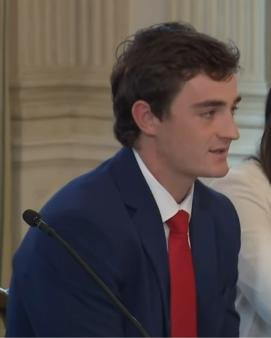
Supporters of AB 2624 frame the measure as a necessary extension of existing privacy laws already in place for reproductive health and gender-affirming care providers. The bill would allow immigration-related service organizations, their employees, and volunteers to apply for address confidentiality programs administered by the Secretary of State, limiting the public release of personal details when threats are perceived. Proponents argue that heightened political tensions, especially around immigration enforcement under the current federal administration, have made frontline workers vulnerable to doxxing, protests, and potential violence. They insist the law includes carve-outs for legitimate journalism and would not prevent reporters from asking questions or publishing stories based on public records.
Assemblymember Bonta and Democratic colleagues who voted to move the bill forward emphasized protecting vulnerable service providers serving immigrant communities. In a statement, supporters noted that similar protections have helped shield abortion providers from harassment in the past. They maintain that the measure targets bad-faith actors seeking to incite threats rather than genuine oversight or whistleblowing.
Critics, however, see something more sinister. Republican Assemblymember Carl DeMaio publicly branded the legislation the “Stop Nick Shirley Act,” accusing Democrats of retaliating against a citizen journalist whose work has embarrassed the state’s progressive establishment. Shirley himself slammed the bill, arguing it would criminalize investigative journalism by restricting the release of videos and images that expose fraud. In interviews and social media posts, he contended that his reporting relies on open public interactions and that limiting the dissemination of such material would effectively muzzle watchdogs. Other conservative voices echoed the concern, warning that California—already notorious for expansive government and high taxes—now appears intent on insulating its nonprofit-industrial complex from accountability.
The timing is telling. Shirley’s videos have highlighted alleged fraud in programs that receive substantial state and federal funding, areas where oversight has historically been lax. Rather than responding with stronger auditing, transparency requirements, or reforms to root out waste, Sacramento appears poised to restrict the tools that brought problems to light. This pattern fits a broader trend in California governance: when scandals emerge, the impulse is often to control the narrative rather than fix the underlying dysfunction.


From a First Amendment perspective, the bill walks a delicate line. Courts have long protected the right to record and publish information about matters of public concern, especially when it involves government spending or potential misconduct. While states can enact reasonable measures against true threats or targeted harassment, broadly restricting the sharing of lawfully obtained footage risks chilling protected speech. The distinction between a journalist exposing fraud and an agitator publishing addresses to incite violence is crucial—but enforcement could easily blur that line, particularly in a politically charged environment.
In my assessment, California’s move exemplifies a troubling tendency among some progressive policymakers to equate accountability journalism with harassment when the revelations prove inconvenient. Public funds support these immigration services; taxpayers therefore have a legitimate interest in knowing how the money is spent and whether programs operate with integrity. If fraud or abuse exists, sunlight—not secrecy—is the proper remedy. Extending “safe harbor” confidentiality to additional categories of providers may sound compassionate, but it risks creating protected classes insulated from ordinary public oversight.
The bill’s advancement also reflects deeper divisions over immigration policy and the role of nonprofits. With federal enforcement ramping up under the Trump administration, tensions have escalated. California has positioned itself as a sanctuary state, offering robust services to undocumented immigrants. When citizen journalists document potential problems—whether inflated caseloads, poor oversight, or outright fraud—supporters of expansive programs naturally feel defensive. Yet the solution cannot be to criminalize the documentation itself. Effective governance requires robust debate, not legal barriers to inconvenient truths.
For Nick Shirley and similar independent investigators, the legislation poses a direct challenge. Their work often thrives on virality and unfiltered video evidence. If AB 2624 becomes law and is interpreted expansively, platforms hosting such content could face pressure to remove material, and creators could encounter civil or criminal exposure. Supporters insist legitimate journalism remains protected, but vague language around “harassment” creates uncertainty that could deter future exposés.
California lawmakers have until the end of August to pass the measure and send it to Gov. Gavin Newsom’s desk. Given Democratic supermajorities in both chambers, passage appears likely unless significant amendments are made to address free-speech concerns. Newsom, who has frequently clashed with critics of his administration’s handling of public funds, would face a choice between signing a bill that shields allies or vetoing one framed as protecting vulnerable workers.
Ultimately, this episode reveals more than a dispute over one activist’s videos. It tests California’s commitment to transparency in an era of massive government spending and polarized politics. When the response to exposed problems is to restrict the exposers rather than reform the programs, public trust erodes further. Taxpayers deserve rigorous oversight of how their money is used—whether in immigration services, health care, or any other area. Shielding providers from scrutiny may offer short-term comfort to policymakers, but it undermines the accountability essential to good governance.
As AB 2624 moves forward, Californians—and observers nationwide—should watch closely. The “Stop Nick Shirley Act” may succeed in muting one voice, but the underlying issues of waste, fraud, and program integrity will not disappear. They will simply fester in the dark until another determined investigator, or a future scandal too large to ignore, brings them back into the light.