Washington Passes Bill for Noncitizens in Law Enforcement
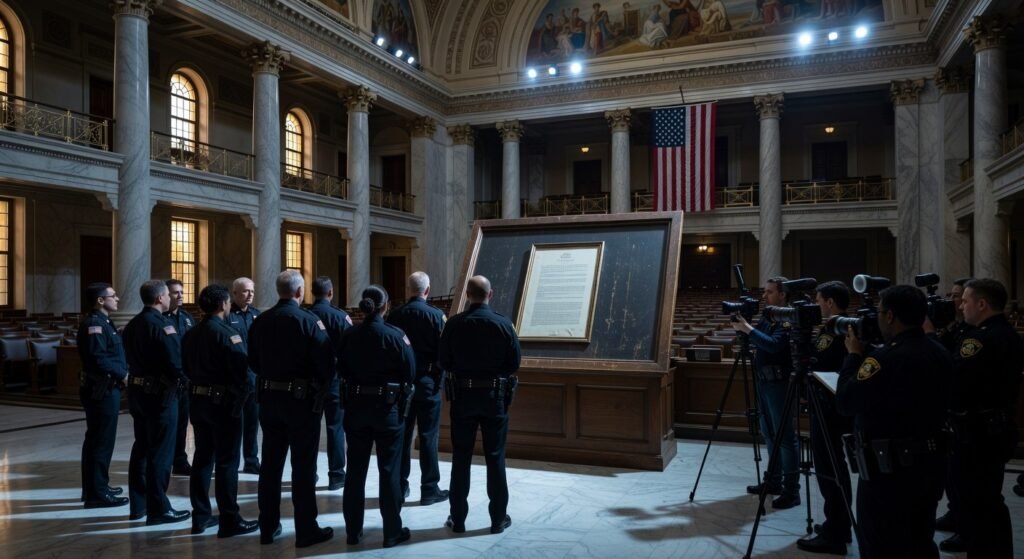
Washington state has enacted a new law that opens the door for noncitizens to join the ranks of law enforcement and prosecution, marking a significant departure from traditional requirements for public safety roles. This legislation, passed on March 6, 2026, allows individuals who are not U.S. citizens to apply for positions as police officers, sheriffs, and even prosecutors, provided they meet other qualifications such as residency status and background checks. The bill’s passage has ignited a firestorm of debate across the nation, with critics arguing that it undermines the fundamental principles of loyalty and allegiance that have long defined American law enforcement.
Under this bill, noncitizens—potentially including legal permanent residents or those with temporary visas—can now enforce laws and pursue charges against American citizens, a development that has conservatives fuming and questioning the very essence of national sovereignty. For instance, a noncitizen officer could make arrests, conduct investigations, and testify in court, while a noncitizen prosecutor might decide on charges and represent the state in trials. This shift is seen by opponents as not only unprecedented but also risky, as it places individuals who haven’t sworn an oath to the U.S. Constitution in positions of authority over native-born residents. The original tweet by Katie Daviscourt highlighted this concern, emphasizing that such power could be wielded by those without full commitment to the country’s values.

The measure reflects a bold shift in policy, driven by Washington’s ongoing challenges with staffing shortages in law enforcement and the judicial system. Over the past decade, the state has grappled with recruitment difficulties, exacerbated by factors like low pay, high stress, and public scrutiny following high-profile police incidents. Proponents of the bill argue that expanding eligibility to noncitizens will help diversify the workforce and address these gaps, drawing from a broader pool of qualified candidates, including immigrants who may bring unique perspectives and language skills to the table. However, critics counter that this approach prioritizes expediency over security, potentially eroding public trust in institutions meant to protect and serve.
#Breaking: Washington state passes bill allowing noncitizens to become law enforcement officers and prosecutors.
This means individuals who have not sworn allegiance to the United States can jail and prosecute American citizens.https://t.co/H78JJn7pRD
— Katie Daviscourt 📸 (@KatieDaviscourt) March 6, 2026
Supporters of the bill, including some state officials and progressive lawmakers, claim it addresses critical staffing shortages while promoting inclusivity in public service. They point to similar policies in other sectors, such as education and healthcare, where noncitizens have been allowed to work without citizenship barriers. For example, advocates reference programs in states like California that permit noncitizens to serve as firefighters or emergency responders. In Washington, the push for this change gained momentum amid a post-pandemic surge in resignations from law enforcement, with departments reporting vacancies that threaten community safety. Yet, critics see it as a direct threat to public trust and national security, warning that it could lead to divided loyalties or even exploitation by foreign actors.
State officials pushed this through despite warnings from various quarters, betting on expanded recruitment to fill critical roles in policing and courts. The legislative process involved heated debates in the state assembly, where Democrats, holding a majority, championed the bill as a modern adaptation to a changing demographic landscape. Background context reveals that Washington’s immigrant population has grown significantly, with over 1.2 million foreign-born residents as of recent census data, many of whom are eager to contribute to society. This bill builds on previous efforts to integrate immigrants, such as driver’s license programs for undocumented individuals, but extends into more sensitive areas of governance. Experts in immigration policy note that while federal law typically requires citizenship for federal law enforcement roles, states have more flexibility, allowing Washington to pioneer this approach.
Expert analysis of the bill reveals a spectrum of opinions. Constitutional scholars like Professor Elena Ramirez from the University of Washington Law School argue that the measure is legally sound, as the U.S. Constitution does not explicitly mandate citizenship for state-level law enforcement positions. However, she cautions that it could face legal challenges under broader interpretations of equal protection or public safety doctrines. On the other hand, retired FBI agent Mark Thompson expressed concerns in a recent interview, stating that allowing noncitizens to prosecute Americans might compromise the impartiality of the justice system. He highlighted potential conflicts of interest, especially in cases involving international elements, and warned that it could deter citizens from cooperating with authorities if they perceive officers as outsiders.
Public reaction has been swift and polarized, with social media platforms becoming battlegrounds for debate. Conservatives, echoing Katie Daviscourt’s tweet, have mobilized online campaigns using hashtags like #ProtectOurBorders and #AmericanJustice, accusing lawmakers of betraying core American values. A rally in Seattle drew hundreds of protesters, including veterans’ groups who argued that only those who have served or sworn allegiance should hold such power. Conversely, immigrant rights organizations praised the bill as a step toward equity, with the ACLU of Washington releasing a statement applauding it for reducing barriers and fostering a more representative force. Polls conducted shortly after the bill’s passage showed a divide, with 60% of Republicans opposing it compared to 45% of Democrats in support, reflecting broader national tensions on immigration.
Long-term implications of this legislation could reshape the landscape of law enforcement in Washington and potentially influence other states. On one hand, it might lead to improved diversity and cultural competency within police departments, helping to bridge gaps in communities with large immigrant populations and reducing instances of bias. For instance, noncitizen officers fluent in languages like Spanish or Mandarin could enhance community policing efforts in diverse urban areas. However, critics fear that it sets a dangerous precedent, potentially leading to abuses where noncitizens might prioritize personal or foreign interests over local laws. National security experts warn of risks in an era of heightened cyber threats and international espionage, suggesting that background checks, no matter how thorough, might not fully mitigate these dangers.
Furthermore, the bill’s impact on public perception could erode confidence in law enforcement at a time when trust is already fragile. If incidents arise where a noncitizen officer is involved in controversy, it could fuel anti-immigrant sentiments and exacerbate social divisions. Economically, the state might see benefits through better-staffed agencies, leading to faster response times and lower crime rates, but at what cost to national identity? As Washington moves forward with implementation, including training programs and oversight mechanisms, the nation watches closely, debating whether this innovation will strengthen or weaken the fabric of American democracy.
In conclusion, while the bill aims to solve immediate practical issues, its broader ramifications underscore the ongoing clash between inclusivity and security in U.S. policy. Supporters envision a more dynamic and representative system, but the concerns raised by critics highlight the need for careful monitoring and potential reforms. As this policy unfolds, it will undoubtedly serve as a litmus test for similar initiatives nationwide, shaping the future of who enforces the laws in America.
Read more: Outrage as State Worker Keys Teslas and Gets Slap on Wrist