Could $8 Gas Be Coming to California Soon?
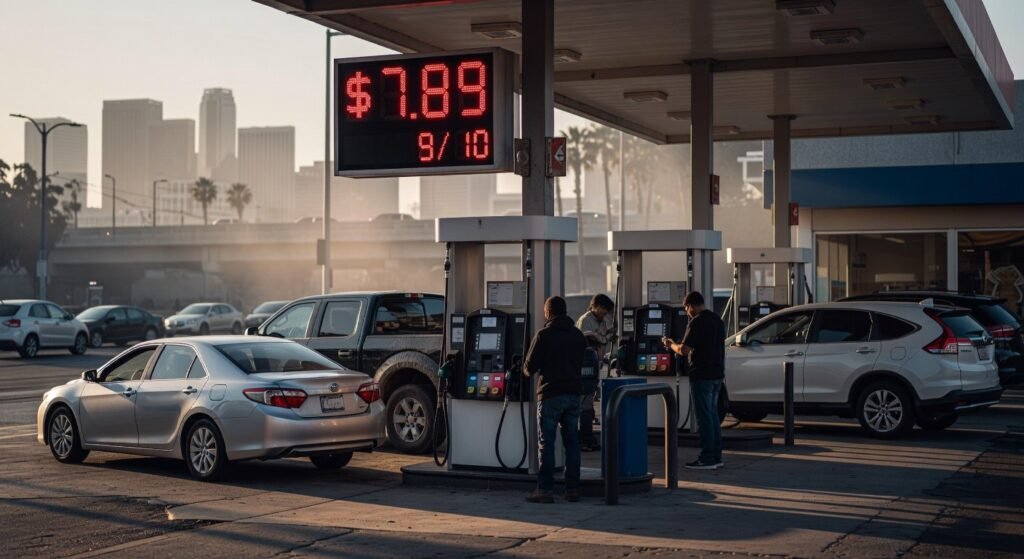
Gas prices in Southern California continue their relentless climb, with a stark warning from an expert suggesting that drivers might soon face the unthinkable: $8 a gallon by the end of the year. This prediction, highlighted in a recent tweet by ABC7 Eyewitness News, underscores the growing anxiety among residents. The tweet, posted on March 7, 2026, points out that factors beyond the ongoing war in Iran are at play, including a complex web of local and global influences that are pushing prices upward. As Southern Californians grapple with these escalating costs, the report serves as a wake-up call, urging a closer examination of the forces driving this surge and the potential consequences for everyday life.
Southern California’s history of high gas prices is well-documented, stemming from a combination of state-specific policies and economic realities. For decades, the region has contended with elevated taxes on fuel, which currently stand at around 58 cents per gallon for state excise taxes alone, plus additional fees for environmental programs. These taxes, implemented to fund infrastructure and combat pollution, are compounded by stringent environmental regulations that require a unique blend of gasoline designed to reduce emissions. This special formulation, known as California Reformulated Gasoline (CaRFG), is more expensive to produce due to its lower volatility and reduced toxic components. The state’s limited number of refineries, many of which are aging and operating at near capacity, exacerbates supply vulnerabilities. When disruptions occur—such as maintenance shutdowns or unexpected outages—the ripple effect can lead to immediate price spikes, making the market particularly volatile and burdensome for families who depend on their vehicles for commuting in sprawling urban areas like Los Angeles and San Diego.
The expert cited in the ABC7 tweet brings a level of credibility to this forecast, drawing on trends in energy markets and economic data to predict the $8 threshold. This analyst, likely a seasoned economist or energy specialist, points to a confluence of factors: while the war in Iran has disrupted global oil supplies by targeting key export facilities and heightening geopolitical tensions, domestic issues are equally significant. In Southern California, increasing demand from a growing population and booming e-commerce sector has strained local distribution networks. Supply chain bottlenecks, amplified by post-pandemic recovery efforts and labor shortages at ports, have further delayed fuel deliveries. This multifaceted analysis reveals that price hikes aren’t solely tied to international conflicts but are deeply rooted in local dynamics, such as California’s reliance on imported oil and the inefficiencies in its refining infrastructure. The expert’s evidence-based approach emphasizes the need for a balanced strategy to address these challenges head-on.
Gas prices in Southern California are continuing to climb, with one expert saying he thinks it's possible we could see $8 a gallon gasoline in SoCal by the end of the year — and not just because the war in Iran. https://t.co/26kDLWRgia
— ABC7 Eyewitness News (@ABC7) March 7, 2026
At the heart of California’s energy predicament is the state’s ambitious push for greener policies, which have inadvertently intensified the financial strain on consumers. Initiatives like the Low Carbon Fuel Standard and the cap-and-trade program aim to reduce greenhouse gas emissions, but they often result in higher production costs for fuel providers. Critics argue that these regulations, while environmentally necessary, disproportionately affect low-income households who spend a larger portion of their budgets on transportation. In areas like the Inland Empire, where long commutes are the norm, the added expense of compliant fuels has led to widespread frustration. The expert’s prediction highlights this tension, calling for innovative solutions such as expanding domestic oil production in safer, regulated ways or accelerating the adoption of alternative fuels like electric vehicles. Without such measures, the cycle of rising costs could persist, underscoring the delicate balance between environmental goals and economic affordability.
Public reaction to the ABC7 tweet has been swift and impassioned, with social media platforms becoming a virtual town square for venting frustrations. Drivers from across Southern California have taken to Twitter, Facebook, and Instagram to share their stories, many expressing outrage over how these price increases are upending their daily lives. Parents in Orange County complain about cutting back on family outings to afford gas for school runs, while small business owners in Riverside highlight the added pressure on their operations. Some users direct blame at the Iran conflict, fearing further escalations could worsen the situation, but others zero in on state policies, labeling them as overly restrictive and out of touch. Hashtags like #SoCalGasCrisis and #StopTheSpike have trended, amplifying calls for accountability from oil companies and government officials. This online uproar reflects a broader sentiment of helplessness, with many demanding immediate relief and long-term reforms to prevent future spikes.
If gas prices do reach $8 a gallon, the economic fallout for Southern California could be profound, affecting everything from household budgets to the broader regional economy. Commuters in traffic-choked areas like the San Fernando Valley might have to make drastic choices, such as reducing discretionary spending on groceries or education, to cover fuel costs. This could exacerbate existing inequalities, as lower-income families bear the brunt of inflation in essential goods. Businesses, particularly those in logistics and transportation, would face higher operational expenses, potentially leading to increased prices for consumers across various sectors. For instance, delivery services and trucking companies might pass on these costs, resulting in elevated fees for online orders or goods transportation. The ripple effect could fuel overall inflation, straining the local economy and possibly dampening growth in key industries like tourism and agriculture, which rely heavily on affordable fuel.
Other energy experts have echoed the ABC7 alert, warning that seasonal factors could accelerate the price climb. Summer driving season typically boosts demand, while refinery maintenance during spring and fall often tightens supplies, creating a perfect storm for escalation. In response, state leaders might consider short-term interventions, such as releasing emergency fuel reserves or offering incentives for conservation, like rebates for carpooling or public transit use. However, these measures face skepticism regarding their effectiveness, as past efforts have sometimes fallen short amid high demand. California’s energy landscape exposes vulnerabilities that demand comprehensive reforms, including investments in renewable energy infrastructure to reduce dependence on traditional fuels. By addressing these issues, policymakers could mitigate future risks while pursuing sustainability goals.

Looking ahead, the potential for $8 gas carries significant long-term implications for Southern California and beyond, prompting a reevaluation of energy strategies at both state and national levels. If prices soar as predicted, it could accelerate the shift toward electric and alternative vehicles, with implications for job markets in the automotive and oil sectors. Washington might revisit policies on domestic oil production, weighing the benefits against environmental commitments, which could lead to heated debates in Congress. For residents, this means adapting through measures like adopting hybrid work models or advocating for better public transportation. Ultimately, the ABC7 tweet serves as a catalyst for change, emphasizing the need for proactive steps to protect consumers and ensure a resilient energy future.
In the face of these challenges, Southern Californians are urged to stay informed and engaged, pushing for solutions that balance economic needs with ecological responsibilities. The expert’s forecast isn’t just a prediction—it’s a call to action, highlighting how intertwined global events and local policies shape daily realities. As the year progresses, monitoring these developments will be crucial, with the potential for $8 gas underscoring the urgency of innovation and adaptation in a car-centric society.
Read more: NYPD Officers Use Business Bathrooms for Prayer, Drawing Complaints