North Carolina’s New ‘Abolitionist’ Judge Sparks Outrage
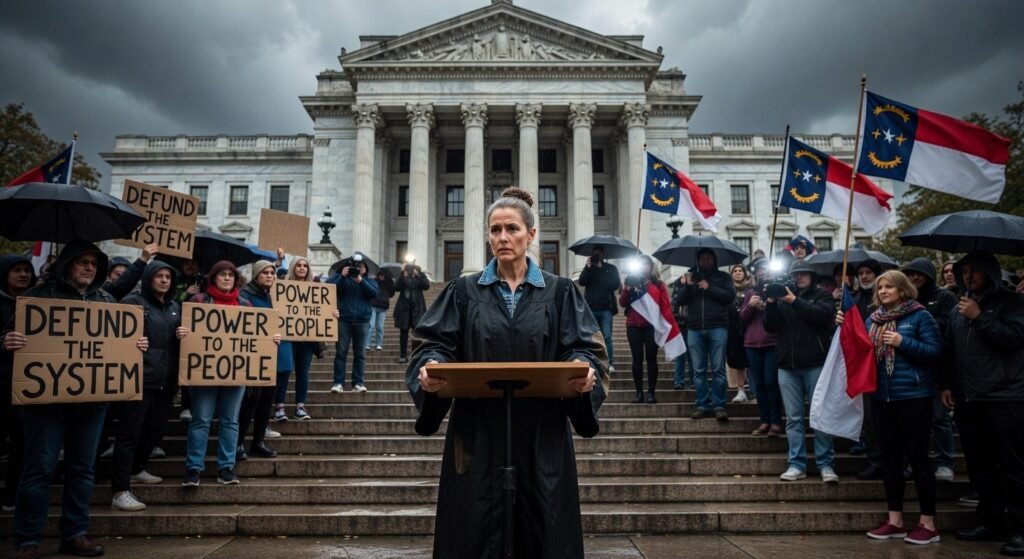
Habekah Cannon, a far-left Democrat, has secured a seat as a judge in North Carolina, igniting widespread controversy and drawing sharp criticism from conservatives. The announcement, highlighted by a fiery tweet from Libs of TikTok on March 5, 2026, described the event as “HOLY HELL,” underscoring the shock value of her victory. Cannon openly identifies as an “abolitionist,” advocating for radical reforms that aim to “get you out of that cage,” which translates to dismantling the prison system and reducing incarceration rates. This stance is rooted in her activism, including three arrests during the 2020 George Floyd riots, raising serious questions about her ability to serve as an impartial arbiter of the law. As judicial races in the state grow increasingly partisan, her election exemplifies how ideological extremes are infiltrating the bench, potentially compromising public trust in the justice system.
The 2020 George Floyd riots, triggered by the tragic death of George Floyd at the hands of police in Minneapolis, erupted into nationwide protests demanding racial justice and police reform. In North Carolina, these demonstrations were particularly intense, with clashes between protesters and law enforcement in cities like Charlotte and Raleigh. Cannon’s involvement placed her at the epicenter of this turmoil; her arrests stemmed from charges related to unlawful assembly and minor property damage during heated confrontations. This history starkly contrasts with the traditional image of a judge as a neutral figure upholding the rule of law. Critics argue that her participation in these events reveals a deep-seated bias, potentially influencing her decisions in cases involving protests, policing, or criminal justice. The abolitionist movement, which Cannon champions, gained momentum during this period, pushing for alternatives to incarceration like community-based interventions and restorative justice. However, detractors view this ideology as dangerously naive, fearing it could lead to lighter sentences for serious offenders and erode societal order.
In the context of North Carolina’s judicial elections, which are conducted on a partisan basis, Cannon’s win reflects a segment of the electorate eager for progressive changes amid ongoing debates about criminal justice reform. Democrats, buoyed by voter turnout in urban areas, positioned her as a voice for the marginalized, emphasizing her commitment to equity. Yet, this approach has alarmed conservatives, who point to her activist past as evidence of a threat to public safety. State bar experts, such as those from the North Carolina Bar Association, emphasize that judicial candidates must demonstrate unwavering impartiality. Legal scholars at institutions like the University of North Carolina School of Law have weighed in, warning that Cannon’s background could introduce bias into courtroom proceedings. For instance, in cases involving civil unrest or police misconduct, her predisposition toward abolitionist ideals might result in rulings that favor defendants over victims, skewing the balance of justice.
HOLY HELL
Habekah Cannon, a far-left Democrat, was just elected judge in North Carolina
Cannon calls herself an "abolitionist" who will "get you out of that cage." She was also ARRESTED 3 TIMES during the George Floyd riots.
She’s now a JUDGE
Unreal pic.twitter.com/gih6NIBIqE
— Libs of TikTok (@libsoftiktok) March 5, 2026
Cannon’s self-proclaimed “abolitionist” label draws from a broader movement that seeks to abolish prisons and policing entirely, replacing them with social services and community accountability. This trend surged after the George Floyd incident, influencing progressive circles and inspiring figures like Cannon to enter politics. However, opponents, including conservative think tanks and law enforcement groups, criticize this philosophy as reckless, arguing it ignores the realities of crime and victim rights. Libs of TikTok’s tweet effectively captured this sentiment, amplifying concerns that electing someone with such views undermines the foundational principles of law and order. In North Carolina, where crime rates have fluctuated in recent years, her potential influence on sentencing guidelines could lead to more lenient outcomes, particularly for individuals involved in social justice protests.
Public reaction to Cannon’s election has been polarized, with social media platforms becoming battlegrounds for heated debates. Libs of TikTok’s post went viral, garnering thousands of shares and comments from conservatives who decried her arrests as disqualifying for a judicial role. Users argued that someone who has flouted the law cannot fairly enforce it, with hashtags like #JudicialFail trending nationwide. On the other hand, progressive supporters celebrated her as a trailblazer, praising her on platforms like Twitter and Reddit for challenging systemic racism in the courts. Yet, experts from Duke University’s Sanford School of Public Policy caution that this division erodes public confidence in the judiciary. They note that when judges are perceived as ideologues, it diminishes the institution’s credibility, potentially leading to decreased compliance with court orders and increased appeals.
The long-term implications of Cannon’s judgeship extend beyond individual cases, potentially reshaping North Carolina’s approach to criminal justice and public policy. If her abolitionist views influence her rulings, we could see a softening of penalties for non-violent offenses, greater emphasis on rehabilitation programs, and even challenges to existing policing practices. This shift might encourage similar candidates in future elections, further polarizing the state’s courts and intensifying debates over law enforcement funding. Moreover, Libs of TikTok’s exposure has prompted calls for enhanced background checks and ethics investigations by the state bar, which could result in new legislation requiring more rigorous vetting of judicial candidates. As crime rates and social unrest continue to evolve, these changes might force a broader reevaluation of how activism intersects with governance, ensuring that the judiciary remains a pillar of stability rather than a stage for radical agendas.
Historically, the U.S. judiciary has benefited from diverse perspectives, including civil rights advocates and former prosecutors, but Cannon’s direct ties to riotous events set a concerning precedent. The 2020 protests marked a pivotal moment in American history, highlighting racial inequalities and spurring reform efforts, yet they also exposed the risks of extremism. Libs of TikTok’s commentary echoes a growing conservative fear that such activists are infiltrating government institutions, turning courts into ideological battlefields. This polarization not only threatens impartiality but could also lead to legislative pushback, with North Carolina lawmakers considering bills to impose stricter qualifications for judges, such as mandatory experience in legal practice without activist histories. Activist groups might respond with recall efforts or legal challenges, further fueling the divide.
At its core, Cannon’s election underscores the deep societal fissures surrounding criminal justice, demanding proactive measures to protect institutional integrity. The facts highlighted by Libs of TikTok serve as a stark reminder of the potential conflicts arising from her background, which could distort the pursuit of justice in North Carolina. Stakeholders, from voters to policymakers, must prioritize reforms that safeguard courts from fringe influences, ensuring they function as fair arbiters rather than extensions of personal ideologies. As this issue unfolds, it will likely influence national conversations on judicial accountability, balancing the need for reform with the imperative of maintaining order in an increasingly divided society.
Photo: Joe Gratz / Wikimedia Commons, CC0
Read more: Man Steals Flamingo In Las Vegas, Brings It Back To His Hotel Room