Scrutiny Intensifies on California Governor’s Wife’s Nonprofit: High Pay and Donor Ties Raise Ethical Questions
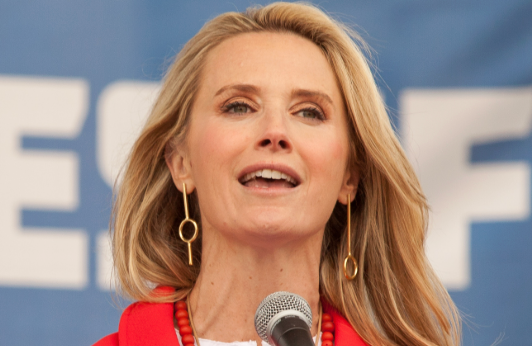
In the glittering world of California politics, where public service often intersects with personal ambition and philanthropy, a fresh wave of scrutiny has fallen on Jennifer Siebel Newsom, the filmmaker-turned-First Partner of California and wife of Governor Gavin Newsom. Recent analyses of IRS filings reveal that her nonprofit organization, The Representation Project, has directed substantial funds—totaling more than $3.7 million over the past decade—to her personally and to her for-profit company, Girls Club Entertainment LLC. This arrangement, while not illegal, underscores broader concerns about transparency, potential conflicts of interest, and the efficacy of charitable organizations tied to powerful political figures.
Founded in 2011 by Siebel Newsom, The Representation Project positions itself as a champion against “harmful gender norms” and “intersectional gender stereotypes.” Through documentaries like “Miss Representation” and “The Mask You Live In,” the organization aims to reshape cultural narratives around gender, masculinity, and equity. It’s a noble mission in an era when gender issues dominate public discourse, from corporate boardrooms to school curricula. Yet, a closer examination of the group’s financials suggests that a significant portion of its resources may be cycling back to its founder rather than amplifying its advocacy work on a broader scale.

According to IRS Form 990 filings reviewed by various watchdog groups and media outlets, Siebel Newsom has drawn an annual salary of approximately $150,000 from the nonprofit for her role as founder and chief creative officer. In addition, Girls Club LLC, which she owns and which holds copyrights to the documentaries, receives another $150,000 annually for licensing fees and production services. Over the years from 2013 to 2024, this has amounted to roughly $1.5 million in direct salary and $1.64 million in payments to her company, per public records. In fiscal year 2024, for instance, the nonprofit reported gross receipts of about $1.7 million, with executive compensation totaling $582,000—far exceeding the median of $133,000 for similarly sized organizations in the advocacy sector.
Charity experts have sounded alarms over these figures. Caitlin Sutherland, executive director of Americans for Public Trust, a conservative-leaning watchdog, described the setup as a potential red flag, noting that it could erode public confidence in nonprofits, especially those linked to elected officials. “When a third of a charity’s revenue ends up in the pockets of its founder’s family, it invites questions about whether the organization is truly serving the public good or acting as a personal enrichment vehicle,” Sutherland told reporters recently. Similarly, Sarah Lee from the Capital Research Center highlighted the pattern of high salaries in politically connected nonprofits, suggesting that without clearer explanations, such arrangements could fuel perceptions of impropriety.
This isn’t the first time The Representation Project has faced criticism. As far back as 2021, investigations by The Sacramento Bee uncovered that the nonprofit had accepted donations from major corporations with significant business before the state government, including Pacific Gas & Electric (PG&E), which contributed $358,000 between 2011 and 2018; AT&T, with over $185,000 from 2017 to 2020; and Kaiser Permanente, donating $20,000 in 2018-2019. These same companies have secured hundreds of millions in state contracts or regulatory approvals during Gavin Newsom’s tenure as lieutenant governor and then governor. PG&E, for example, received over $323 million in state funds in 2021 alone, amid ongoing controversies over its role in California wildfires. The nonprofit reportedly ceased accepting PG&E donations in 2019, but the historical ties persist.
Adding another layer, The Representation Project’s films have found their way into California public schools, with licensing fees generating about $1.48 million from educational institutions. A 2014 tax filing boasted that the materials were used in 1,000 schools, and state education guidelines under Newsom’s administration have promoted the documentaries. Critics argue this creates a pipeline where taxpayer dollars indirectly flow to Siebel Newsom’s enterprises, blurring the lines between public education policy and private gain. One government watchdog report from 2023 labeled the nonprofit “out of compliance” for soliciting donations from state vendors and campaign contributors while failing to meet certain transparency standards.
From a business perspective, this model isn’t uncommon in the nonprofit world, where founders often license intellectual property from their for-profit arms. Think of it as a hybrid structure: the charity benefits from the content, while the creator retains control and revenue streams. But in the context of politics, it amplifies risks. Gavin Newsom, who has positioned himself as a progressive leader on issues like gender equity and climate change, has his own history of financial entanglements. In late 2024, he was fined $13,000 by California’s Fair Political Practices Commission for delayed reporting of over $14 million in “behested payments”—donations solicited by politicians for charitable causes. Though deemed negligent rather than intentional, it highlights a pattern of lax disclosure in the Newsom orbit.
In my view, this saga reflects a deeper malaise in American political philanthropy. Nonprofits led by spouses of high-profile officials—be it Jill Biden’s education initiatives or Melania Trump’s youth programs—often serve dual purposes: advancing worthy causes while bolstering family brands. But when compensation reaches levels seen here, it invites cynicism. Is The Representation Project truly disrupting gender stereotypes, or is it subsidizing a lifestyle for one of California’s power couples? Siebel Newsom, a former actress with roles in shows like “Mad Men” and heir to a substantial family trust, doesn’t appear to need the funds for survival. Yet, the optics matter, especially as Gavin Newsom eyes a potential national stage amid speculation of a 2028 presidential run.
Comparatively, other gender-focused nonprofits like the Geena Davis Institute on Gender in Media or Time’s Up operate with more modest executive pay relative to revenue. The Geena Davis Institute, for instance, reports CEO compensation around $200,000 on revenues exceeding $2 million, with a stronger emphasis on research grants over personal film promotion. The Representation Project’s 2023 gala, “Flip the Script,” raised nearly $600,000 but cost over $216,000 to produce—efficient fundraising, perhaps, but questions linger about donor motivations when attendees include executives from AT&T and Comcast.
Representatives for the Newsoms have pushed back vigorously. A spokesperson for the governor emphasized that he plays no role in the nonprofit’s fundraising and that state contracts are awarded through transparent processes. “Any suggestion of influence peddling is categorically false,” they stated. Siebel Newsom’s team did not respond to requests for comment on the latest revelations, but past defenses have highlighted the value of her work in inspiring change.
Ultimately, this isn’t just about dollars and cents; it’s about trust in institutions. In a state grappling with housing crises, wildfire risks, and economic inequality, voters deserve assurance that charitable dollars aren’t being siphoned for personal benefit. As California—and potentially the nation—considers Newsom’s leadership, greater transparency in these gray areas could go a long way. Without it, the narrative of progressive idealism risks being overshadowed by whispers of self-interest.