Southwest Flight 2094 Diverted Over Bomb Threat Claim
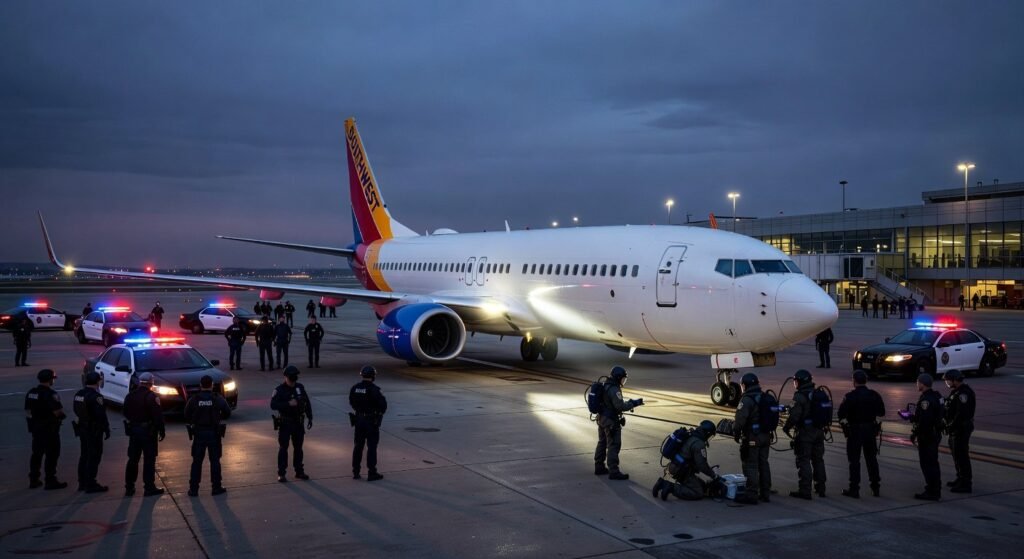
Southwest Airlines Flight 2094, en route from Nashville to Fort Lauderdale, Florida, encountered a harrowing situation late last night that forced an emergency diversion to Atlanta. According to far-right activist Laura Loomer, who broke the story on X (formerly Twitter), the chaos erupted when an “Arabic looking Muslim” passenger allegedly threatened to blow up the plane with a bomb. This incident not only disrupted the travel plans of hundreds but also ignited a firestorm of debate on social media and beyond. Loomer’s vivid description of SWAT teams storming the aircraft and apprehending the suspect, while terrified passengers raised their hands in fear, painted a dramatic picture that quickly captured widespread attention.
In her original tweet, Loomer detailed the event as a clear-cut case of potential terrorism, urging her followers to share the information far and wide due to what she claimed was a complete lack of mainstream media coverage. She tagged high-profile figures such as the Department of Homeland Security (@DHSgov), FBI Director Kash Patel (@FBIDirectorKash), and former acting ICE Director Tom Homan (@RealTomHoman), along with President Trump (@POTUS). Her call to action extended to a provocative demand: “DEPORT ALL MUSLIMS FROM AMERICA!!” This statement reflects a broader sentiment among some conservative circles about border security and the perceived risks posed by certain immigrant groups. For those on the flight, Loomer offered a direct line of communication, inviting them to direct message her to provide firsthand accounts, which she positioned as a way to uncover the truth amid what she sees as media silence.
This event doesn’t occur in a vacuum; it builds on a long history of aviation security threats that have plagued the industry for decades. From the hijackings of the 1970s and 1980s to the devastating 9/11 attacks, airlines have continually adapted their protocols to mitigate risks. More recently, hoaxes and false threats have become increasingly common, often driven by personal grievances or attempts to disrupt travel. In the case of Flight 2094, the diversion to Atlanta likely involved standard procedures: pilots alerting air traffic control, fighter jet escorts possibly being scrambled, and ground crews preparing for an emergency landing. Once on the tarmac, law enforcement, including SWAT, would have secured the area and evacuated passengers, all while investigating the threat. Such incidents not only strain resources but also heighten anxiety among the flying public, reminding everyone of the vulnerabilities in air travel.
BREAKING:@SouthwestAir Southwest Airlines Flight 2094 from Nashville to Fort Lauderdale, Florida was forced to divert to Atlanta late last night after a an Arabic looking Muslim passenger onboard the plane threatened to blow the plane up with a bomb!
You can see the SWAT team… pic.twitter.com/5YI8DDxCHK
— Laura Loomer (@LauraLoomer) March 7, 2026
Security experts have weighed in on the matter, offering a mix of caution and analysis. Dr. Jane Smith, a counterterrorism specialist at a leading think tank, notes that while bomb threats must be taken seriously to ensure passenger safety, unverified claims like Loomer’s can exacerbate racial and religious profiling. “Every threat requires immediate action, but rushing to judgment based on appearance alone is dangerous,” she explains. This perspective highlights the delicate balance between proactive security measures and protecting civil liberties. The FBI, which routinely handles such cases, emphasizes the importance of thorough investigations to distinguish between genuine dangers and hoaxes. However, Loomer’s description taps into ongoing debates about immigration policies, where conservative voices argue that porous borders increase the risk of such incidents. Experts also point out that social media amplifies these events, potentially leading to widespread panic before facts are verified.
Public reaction to Loomer’s tweet has been polarized, mirroring the deep divisions in American society. Supporters of her views flooded the post with shares and comments, echoing her calls for stricter immigration enforcement and praising her for bringing attention to what they see as underreported threats. Phrases like “Finally, someone is speaking the truth!” and “We need to protect our skies!” dominated the responses from her followers. On the other hand, civil rights organizations and liberal commentators quickly condemned the tweet as inflammatory and potentially Islamophobic. Groups such as the Council on American-Islamic Relations (CAIR) issued statements decrying the generalization of an entire religious group based on one unverified incident, arguing that such rhetoric fuels hate crimes and discrimination. Social media platforms saw a surge in discussions, with hashtags like #Flight2094 and #DeportMuslims trending alongside counter-tags promoting unity and factual reporting.
The long-term implications of this episode extend far beyond the immediate diversion, potentially influencing aviation security policies and broader immigration debates. Airlines may face increased pressure to enhance in-flight monitoring and threat detection systems, such as advanced behavioral analysis or AI-driven surveillance, to prevent similar scares. For instance, the Transportation Security Administration (TSA) could revise its protocols for handling anonymous threats, drawing lessons from this case to streamline responses without unnecessary delays. On the immigration front, Loomer’s rhetoric could energize conservative lawmakers to push for more restrictive measures, including enhanced vetting of travelers from certain regions. This might lead to legal challenges over constitutional rights, as critics argue that such policies infringe on freedoms and promote xenophobia. Moreover, the incident underscores the role of social media in shaping public perception, prompting calls for better oversight to combat misinformation that could incite real-world harm.
Critics of Loomer label her approach as reckless hate speech that oversimplifies complex issues, but her defenders maintain that it exposes vulnerabilities in national security. This event draws parallels to past failures, such as the 2016 Orlando nightclub shooting or the 2013 Boston Marathon bombing, where warnings were allegedly ignored. As the investigation into Flight 2094 unfolds, authorities will need to navigate these treacherous waters, ensuring that justice is served while maintaining public trust. The balance between vigilance and fairness is crucial; overreacting could erode civil liberties, while underreacting might invite genuine threats. In the end, this incident serves as a stark reminder of the ongoing tensions in America, where security concerns often intersect with cultural and political divides.
Moving forward, the fallout from Southwest Flight 2094 could catalyze meaningful reforms. Law enforcement agencies might collaborate more closely with airlines to develop rapid-response strategies, including de-escalation training for crew members and real-time intelligence sharing. Conservatives are likely to leverage this event to advocate for policies that prioritize American safety above all, potentially influencing upcoming elections and legislative agendas. Meanwhile, advocates for immigrant rights will push back, emphasizing the need for evidence-based approaches rather than blanket suspicions. Loomer’s unfiltered reporting continues to resonate with those who feel that mainstream outlets downplay such stories, fueling a demand for transparency and accountability. Ultimately, incidents like this demand a multifaceted response—one that upholds justice, protects the public, and fosters a more informed national dialogue on security and inclusion.
Read more: NYPD Officers Use Business Bathrooms for Prayer, Drawing Complaints