CBS Investigation Reveals Hospice Fraud Hotspot in Los Angeles
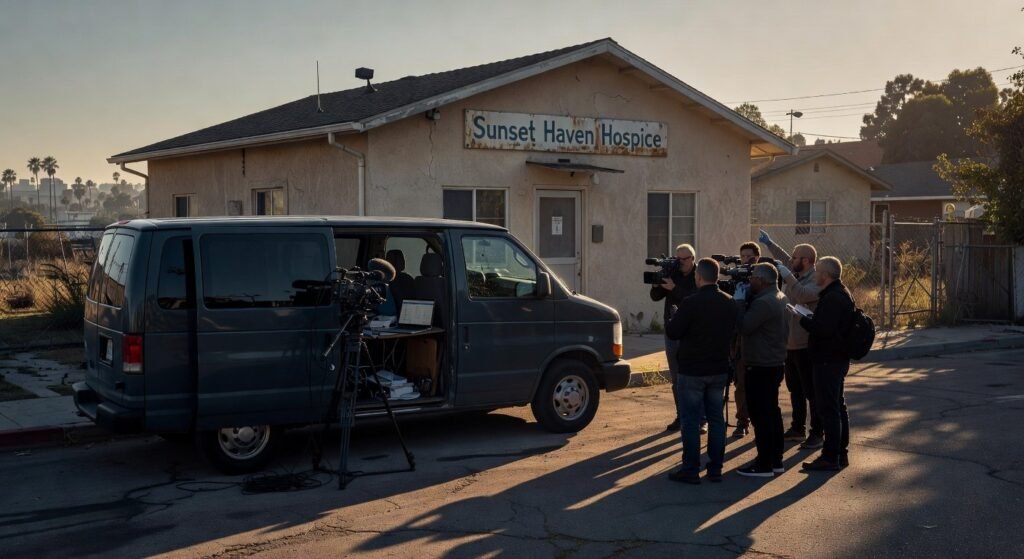
CBS News has exposed a troubling epicenter of hospice fraud in Los Angeles, California, shedding light on a systemic issue that has quietly plagued the healthcare industry for years. The investigation, conducted by dedicated reporters, uncovers a web of deceptive practices that exploit vulnerable patients and siphon taxpayer dollars. At the heart of this exposé is a single building in Los Angeles that houses an astonishing 89 registered hospices, a concentration that raises immediate red flags about potential abuse and regulatory oversights.
Delving deeper into the findings, CBS reporters visited what has been dubbed “ground zero” for hospice fraud, revealing how this one location serves as a stark symbol of broader problems. Hospice care, intended to provide compassionate end-of-life support for terminally ill patients, has instead become a target for fraudulent schemes. These often involve billing Medicare and other insurers for services that were never rendered, enrolling patients who do not qualify, or even falsifying medical records to extend payouts. In Los Angeles, the sheer number of hospices packed into a single building suggests a coordinated effort to evade scrutiny, with experts estimating that such setups allow operators to share resources while minimizing detection. This CBS report, based on interviews with whistleblowers, former employees, and affected families, paints a vivid picture of how fraudsters prey on the system’s weaknesses.

Bari Weiss, a prominent journalist and commentator, amplified the investigation through a tweet on March 10, 2026, calling Los Angeles the epicenter of these schemes and urging her followers to read the full story. Her endorsement highlights the growing public interest in healthcare accountability, as Weiss pointed out the alarming statistic of 89 hospices in one building—a figure that underscores the scale of the problem. Fraud in hospice care typically manifests through tactics like “upcoding,” where providers bill for more intensive services than actually provided, or by prematurely admitting patients to hospice programs to start the reimbursement clock earlier. This not only defrauds the government but also denies genuine patients the quality care they deserve, potentially shortening lives or causing unnecessary suffering.
Incredible investigation today from @CBSNews. Our reporters visited "ground zero" for hospice fraud: Los Angeles, California. One building had 89 registered hospices . . .
Read it here:https://t.co/cHuzIo4Xec
— Bari Weiss (@bariweiss) March 10, 2026
Experts in healthcare policy and fraud prevention have been quick to analyze the implications of this CBS investigation, warning that such concentrations of hospices indicate deeper systemic failures. Without robust oversight, bad actors can exploit loopholes, leading to a culture of impunity.” According to data from the Department of Justice, hospice fraud has cost taxpayers billions over the past decade, with Los Angeles emerging as a hotspot due to its large population of elderly residents and the complexity of its healthcare market. Analysts point to factors like inadequate staffing requirements and the ease of obtaining hospice licenses as contributors to this environment, emphasizing the need for stricter regulations and routine audits.
Public reaction to the CBS report has been swift and multifaceted, with social media platforms buzzing with outrage and calls for reform. Bari Weiss’s tweet alone garnered thousands of retweets and comments, with users sharing personal stories of loved ones affected by subpar hospice care. Advocacy groups, such as the National Hospice and Palliative Care Organization, have responded by distancing themselves from the fraudulent operators while pushing for industry-wide standards. Meanwhile, politicians in California have begun to weigh in, with state representatives promising hearings to address the issue. This groundswell of public sentiment underscores a broader distrust in healthcare institutions, fueled by recent scandals and the lingering effects of the COVID-19 pandemic, which exposed vulnerabilities in end-of-life care.

To provide necessary background context, it’s essential to understand the evolution of hospice care in the United States. Established under Medicare in the 1980s, hospice programs were designed to offer holistic support for patients with a prognosis of six months or less to live. However, over the years, the program’s growth has outpaced regulatory measures, leading to an influx of for-profit entities more focused on financial gains than patient welfare. In Los Angeles, a city with a high density of senior living facilities and a diverse population, this has created fertile ground for fraud. Historical data from the Office of Inspector General reveals that between 2016 and 2025, investigations into hospice fraud resulted in over $1.5 billion in settlements and judgments nationwide, with California accounting for a significant portion. This context illustrates how the CBS investigation is not an isolated incident but part of a larger pattern that demands immediate attention.
Long-term implications of this fraud hotspot are profound, affecting not only financial resources but also the ethical foundation of healthcare. If left unchecked, the prevalence of such schemes could erode public trust in hospice services, deterring families from seeking legitimate care for their loved ones. Experts predict that without reforms, fraud could lead to higher healthcare costs for everyone, as increased oversight and enforcement efforts strain budgets. Potential solutions include enhancing CMS’s auditing processes, implementing real-time data monitoring, and requiring more stringent background checks for hospice operators. Lawmakers in Washington have already signaled interest, with bills in Congress aiming to tighten regulations on enrollment and billing practices. For patients and families, the human cost is immeasurable—stories of inadequate pain management, unqualified staff, and emotional neglect highlight the urgent need for change. This CBS investigation serves as a catalyst, potentially sparking a nationwide reevaluation of how we protect our most vulnerable citizens.

In conclusion, the CBS News report on hospice fraud in Los Angeles is a wake-up call that exposes the dark underbelly of a system meant to provide dignity in death. By highlighting the extreme case of 89 hospices in one building, it forces us to confront the realities of greed infiltrating healthcare. Americans deserve better protection, and with growing public pressure and expert advocacy, there is hope for meaningful reforms. Lawmakers must act swiftly to implement safeguards, ensuring that hospice care remains a beacon of compassion rather than a hotspot for exploitation.
Photo: Keith Evans / Wikimedia Commons, CC BY-SA 2.0
Read more: 22-Year-Old Arrested for Raping 94-Year-Old in Baton Rouge