Americans Crave a Third Political Party More Than Ever
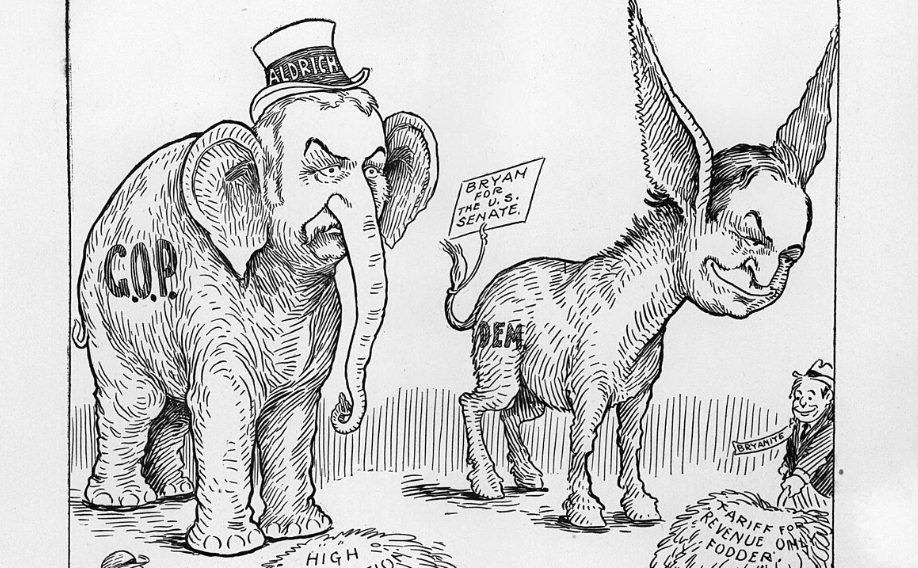
A striking new Gallup poll captures the depth of Americans’ frustration with the two-party stranglehold on U.S. politics: nearly two-thirds now say the Democratic and Republican parties do such a poor job representing the public that a major third party is essential.
Conducted Sept. 2-16 among 1,000 adults, the survey found 62% backing the need for that alternative — just one point below the all-time high of 63% recorded in 2023. Only 30% believe the existing parties are doing an adequate job, one of the lowest readings in decades of Gallup tracking.
The sentiment is strongest among independents (74%), but it crosses party lines: 58% of Democrats and 43% of Republicans agree a third force is needed. Gallup has long observed that support among partisans tends to rise when their own party is out of the White House.
Yet that widespread desire collides with cold electoral reality. Only 15% of respondents say they are “very likely” to vote for a candidate outside the two major parties, while another 40% are “somewhat likely.” Independents again lead the way (29% very likely), but the figure drops to 9% for Democrats and 7% for Republicans.
When the survey posed the classic real-world dilemma — a third-party candidate seems best qualified, yet polls and experts give them almost no chance of winning — a slim majority (54%) said they would abandon the underdog and vote for a Democrat or Republican anyway. Just 44% said they would stay loyal.
Gallup analysts highlight the stubborn gap: “While U.S. institutional structures like single-member districts and the Electoral College have long been cited as barriers to successful third parties, perceptual barriers held by voters may be just as difficult to overcome.”
History is littered with examples of why those barriers matter. No third-party or independent candidate has ever won the presidency. Theodore Roosevelt came closest in 1912, bolting the GOP to run under the Progressive “Bull Moose” banner and claiming 27% of the popular vote plus six states — only to lose to Woodrow Wilson. In 1992, independent Ross Perot drew nearly 19% against Bill Clinton but still finished third.
Even in Congress, true independents are rare. Sens. Bernie Sanders of Vermont and Angus King of Maine both serve as independents but caucus with Democrats to wield influence.
With a margin of error of ±3 percentage points, the poll paints a familiar American political portrait: deep dissatisfaction with the status quo, tempered by a deep-seated reluctance to risk “wasting” a vote or spoiling the outcome for the least-favored major-party option.
As another election cycle gathers steam, the findings underscore a stubborn paradox — voters want change in theory, but the two-party system still owns the ballots in practice.
Read more: LA Contract Sparks Outrage Over Alleged $1,000-a-Day Homeless Beds